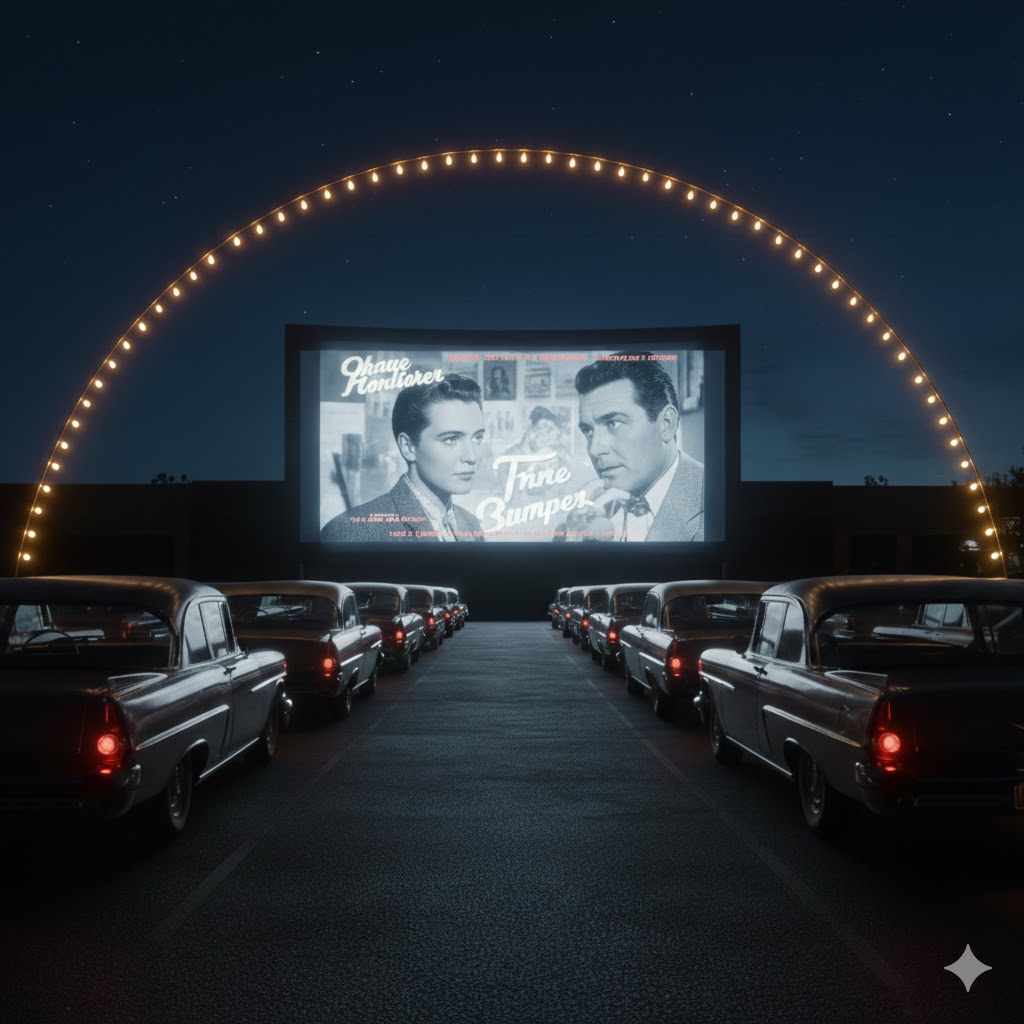
Drive-In Cinemas
in Europe
Europe's drive-in tradition started in Rome in 1957 and spread to Germany, Spain, and beyond. Today, permanent venues and seasonal pop-ups operate across the continent.
Directory of 30 drive-in cinemas across 8 countries, with maps, directions, and visiting information.
Browse by Country
Find drive-in cinemas by country
Outdoor Cinema From Your Car
Drive-in cinemas project films onto large outdoor screens. Visitors watch from their cars, with audio broadcast over FM radio or through window-mounted speakers.
Open-Air Screening
Films play on screens up to 20 meters wide, visible after sunset. Most European drive-ins operate from April through October, with screenings starting at dusk. In Germany, where the Autokino format is established, some venues operate year-round.
FM Radio Audio
Audio is broadcast on an FM frequency displayed at the entrance. Tune your car stereo to hear the film through your own speakers. Some Swiss venues broadcast in two languages simultaneously on separate frequencies. A portable FM radio works as backup and saves your car battery.
Flexible Format
Drive-ins accommodate families with children, groups, and couples without the constraints of assigned seating. Kids can move around, conversations stay inside your car, and pets are welcome at many venues. Some sites allow lawn chairs and blankets beside the vehicle.
Pricing
Admission at European drive-ins ranges from free (touring Italian events) to around 15 EUR per person at German Autokinos. Some venues charge per car rather than per person. Spanish autocines typically run 6-8 EUR per person, often including a double feature.
Food and Drinks
Most permanent drive-ins have a concession stand or partner with food trucks. German Autokinos typically offer burgers, pizza, and snacks at a kiosk. Spanish autocines often include a snack bar. Concession revenue keeps venues operating, so buying on-site supports the business directly.
European History
The Metro Drive In near Rome opened in 1957 as Europe's first. Germany followed in 1960 with the Autokino Gravenbruch near Frankfurt. The format peaked in Germany in the early 1970s with 23 Autokinos. COVID-19 restrictions in 2020 triggered a revival, with temporary venues opening across the continent.
Frequently Asked Questions
Practical information for visiting drive-in cinemas in Europe.
How does audio work at European drive-ins? ▼
When are European drive-ins open? ▼
What should I bring? ▼
How much does it cost? ▼
Are drive-ins a recent phenomenon in Europe? ▼
Which country has the most drive-ins? ▼
What about weather and rain? ▼
About The Drive-In Club
The Drive-In Club is a directory of drive-in cinemas across Europe. Each listing includes location, current operating status, and practical visiting information where available.
The European drive-in landscape is smaller and more scattered than in the United States, where approximately 300 venues operate. In Europe, permanent drive-in cinemas number in the dozens, concentrated in Germany, Spain, and a handful of other countries. The format varies: German Autokinos are established businesses, Spanish autocines are often family-run, and British drive-ins tend to operate as touring events.
Country guides provide historical context and specific venue information. The interactive map shows all listed venues with color-coded status markers. Have a correction or know of a venue not listed? Contact us.
Find a Drive-In Cinema
Explore drive-in cinemas across 8 European countries on our interactive map.